
River waves · building, running, surfing
River waves
Building a river wave takes years and touches hydraulic engineering, water law, ecology, funding and club work. The knowledge is scattered – in clubs, engineering offices, council minutes. We collect it here, with sources, while we need it ourselves. And we look at where waves already exist and how they came about. The Remswelle initiative is working towards a standing surf wave in the river Rems at Winterbach, near Stuttgart in southern Germany. → The project
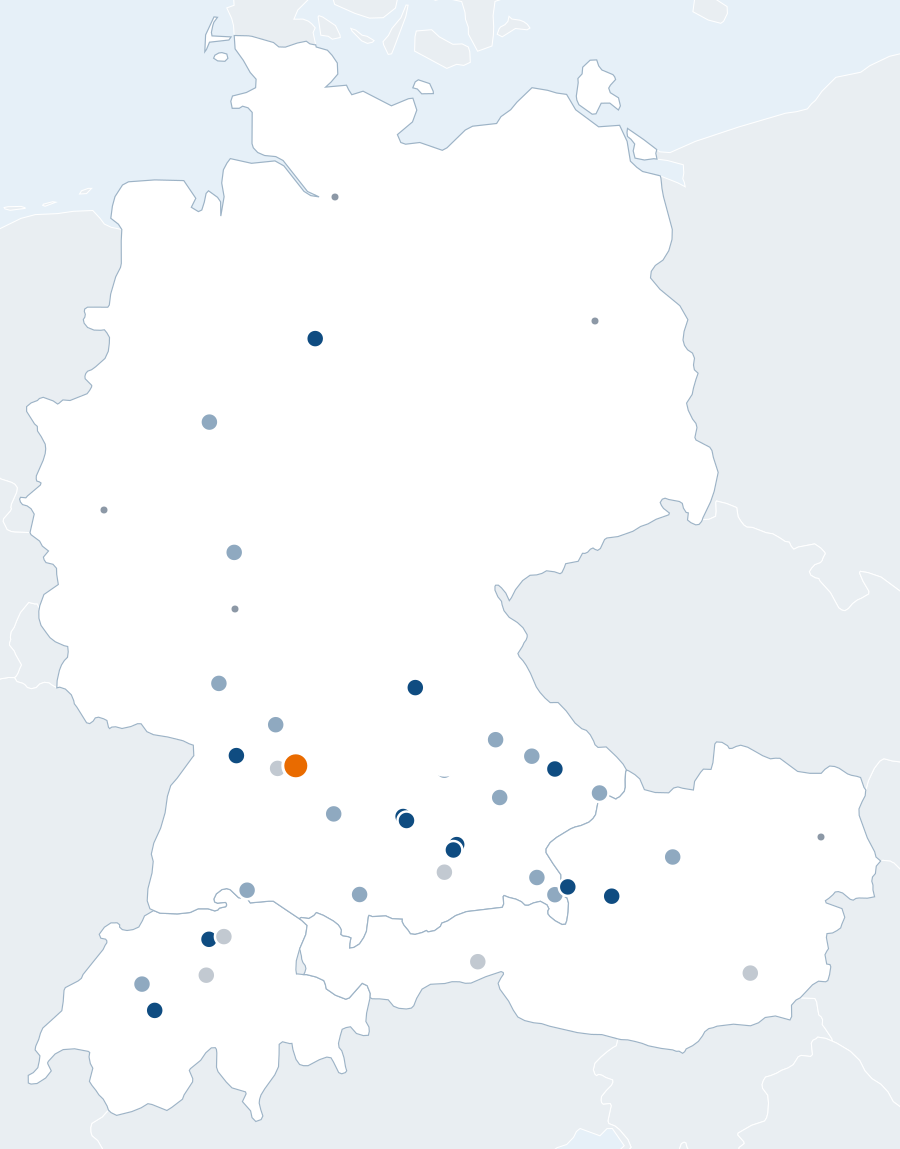
Waves and projects
- All river waves in Germany, Austria and Switzerland: map, directory and project tracker
- Case studies: seven river waves compared – Nuremberg, Hanover, Pforzheim, Augsburg, Salzburg, Thun, Eisbach
- Where rivers become surfable by themselves: natural river waves worldwide
Building and running a river wave
Hydraulics and technology
- How a standing wave forms – hydraulic jump, Froude number, four adjusting screws
- River flow of the Rems: how many days a year would a wave be surfable?
- Wave types and technology: designs and suppliers
Ecology and permits
- Permitting a river wave: water law, ecology, flood safety
- Water quality of the Rems: what we know, what we have to measure
- Can a wave create habitat? Surf structures and river ecology
Costs, operators and operation
- What a river wave costs – and who pays for it
- Operators and operation: club, liability, insurance, slots
- Feasibility study: what is examined
Surfing and sport
- How to surf a river wave
- Leash and safety at river waves: rules and technology
- Rapid surfing: federation, German Championships, league
- Surfing, young people and health: what research says
- Surfing without a wave: surfskate, pump track, wing skating, street surfing
Reference
Why surfers also care about the river, its landscape and its history: → Rems and Winterbach