
The Remswelle project
Children and young people at the Remswelle
A wave is not a youth programme. But it can be a place young people want to go to of their own accord – and that is more than many sports facilities can say of themselves. This page sets out what we expect from it, what we base this on and where the limits are. The evidence in detail: → Surfing, young people and health – what research says
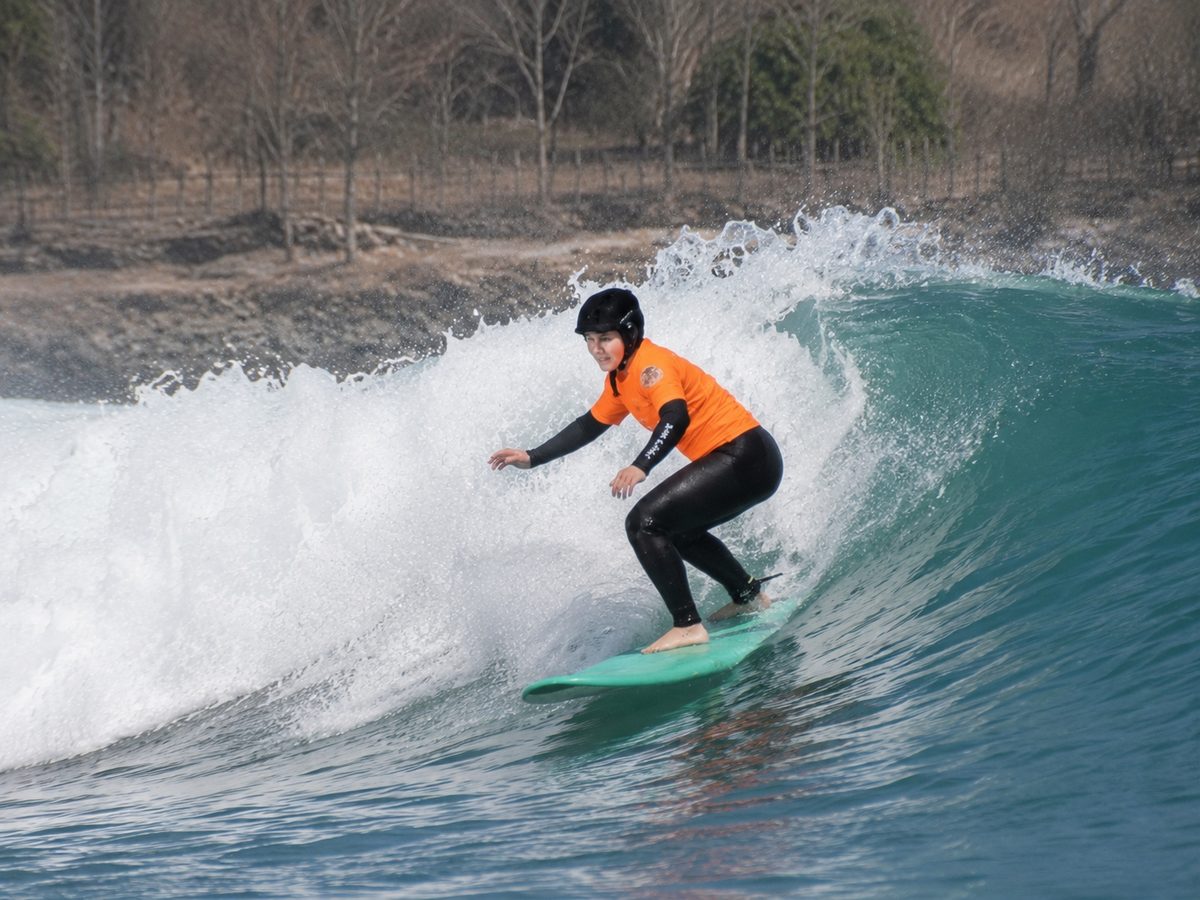
A sport that appeals to young people
Like skateboarding, BMX and parkour, surfing is one of the movement cultures that young people shape themselves – that is how the Third German Children's and Youth Sport Report classifies it. Such sports also reach young people who have little interest in traditional club sport. And surfing has what young people look for: a scene, skill, role models, a moment you never forget.
Exercise you do by choice
Only about a quarter of children and young people in Germany are as physically active as the World Health Organization recommends. At the same time, 10- to 17-year-olds spend an average of more than two hours a day on social media on weekdays. A wave does not cure problematic media use. But offers of physical activity have to be able to compete with what fascinates young people – and surfing is full-body training, balance school and a test of courage in one, outdoors and on the water.
A meeting place
At the waves in Pforzheim, Nuremberg and Hanover you see families, spectators and cyclists on the banks. The clubs there are run by volunteers; those who have been around for a while teach the newcomers to surf. A wave brings together generations that rarely do sport together. → Sustainability
People protect what they know and value
Whoever surfs in a river notices when the Rems carries a lot of water and when little, and wants it to be clean. The German Sports Youth (dsj) and NAJU (youth organisation of NABU) put it briefly: "Sport and the environment belong together." Anyone who experiences the Rems as their own place does not throw litter there and looks out for the kingfisher and the beaver. Our Rems clean-up is a start; children are welcome. A wave creates further occasions: school classes and clubs can experience on the bank where the water comes from, what lives in the river and why the Rems in Winterbach was restored. → Clean-up · → Wildlife on the Rems
Surfing on the doorstep
Until now, surfing inland meant driving or flying to the sea. A wave in Winterbach, a few minutes' walk from the suburban railway station and right on the Rems valley cycle path, makes the sport accessible to children and young people from the region – after school, by bike. The German Surfing Federation (DWV) sees exactly this as an opportunity of standing waves: because of the lower travel costs, the sport could be "open to a larger group of children and young people".
A sport with a future
Rapid surfing has German Championships with junior categories, and since 2026 a national squad and a European Championship; the German Olympic Sports Confederation speaks of a "steep development curve". In the Stuttgart region, with 2.8 million inhabitants, there is not yet a single place to train for it. → Rapid surfing
Where children played football in Winterbach – and where they do today
Heading out with friends for a kickabout, without a club and without an appointment: that needs football pitches close to where people live. The state's aerial photographs show that Winterbach used to have more such places.
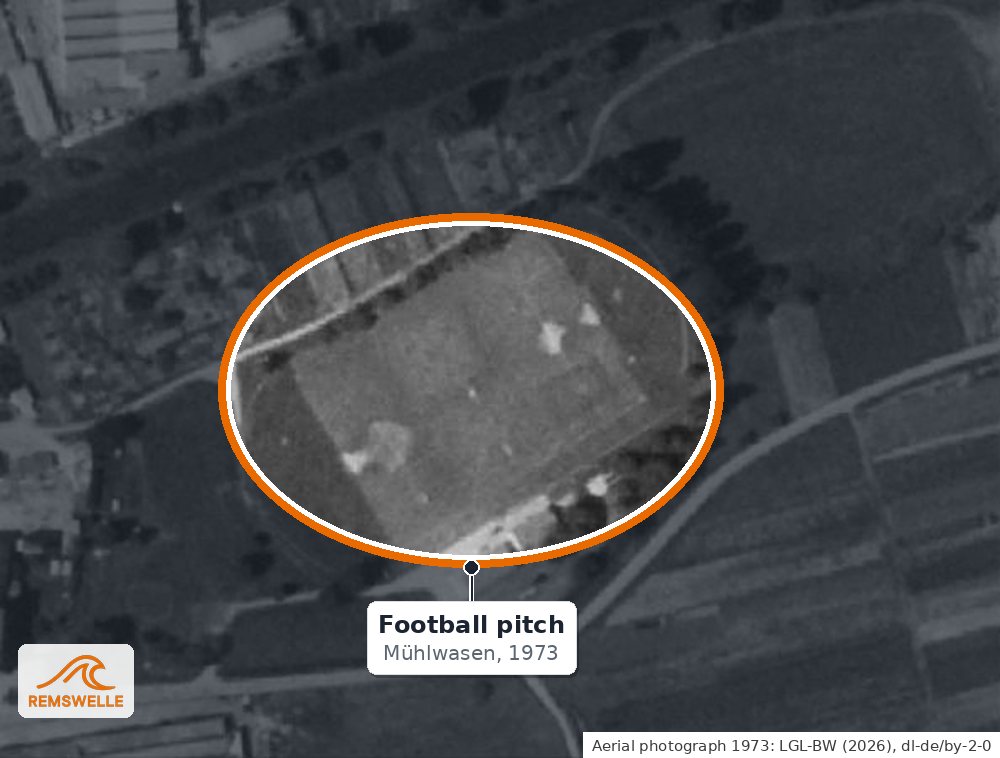
1973: In the Mühlwasen, between the village and the Rems, there is a football pitch with a running track – exactly where the Peter Hahn company site stands today.
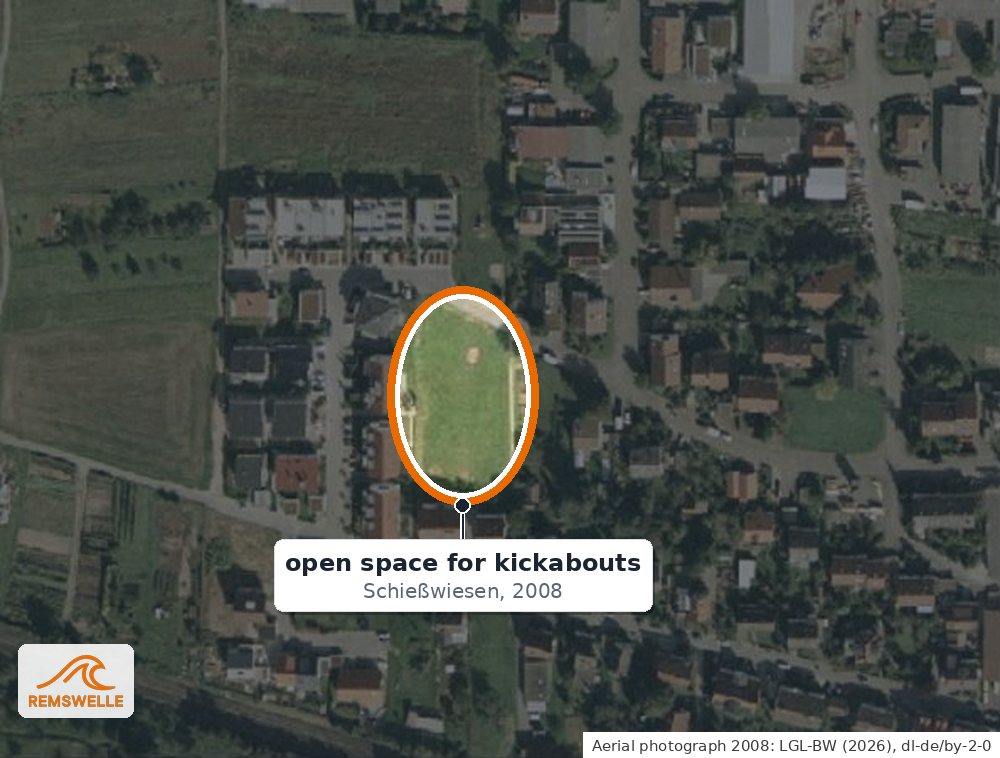
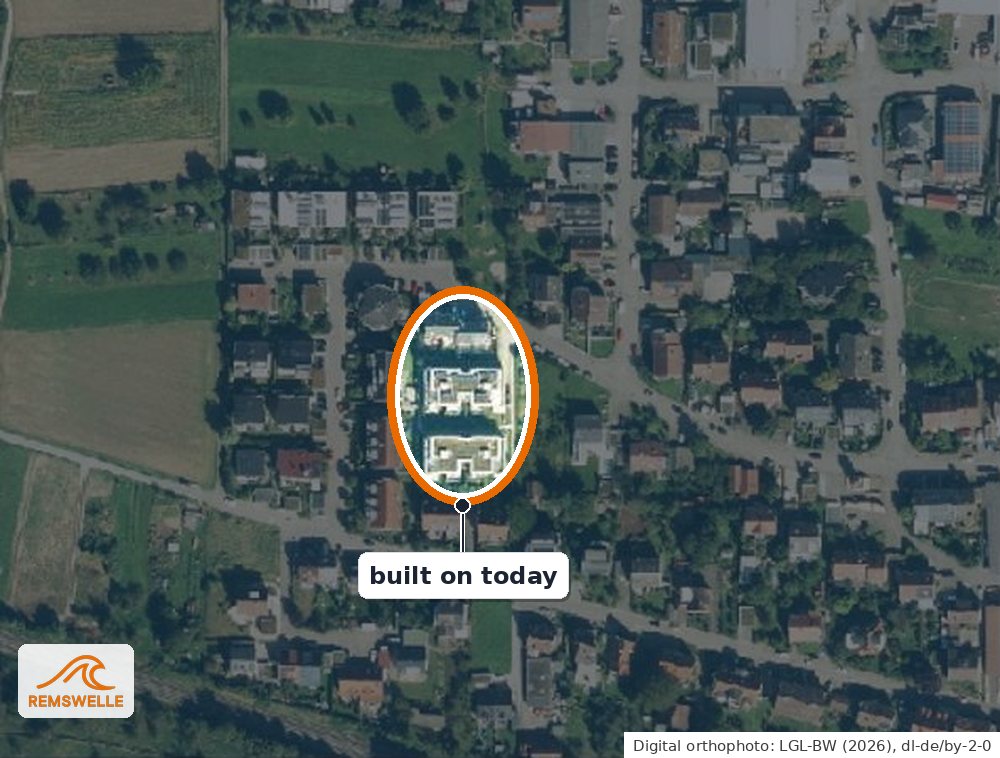
So in the past you could simply head out and play football in several neighbourhoods – in the Mühlwasen, and later on the open space in the Schießwiesen. Today this is possible mainly at the sports grounds by the Salierhalle. From the outer residential areas it is about one and a half to two kilometres on foot: about 21 minutes from Sonnenstraße and Buchenweg, about 23 from Herrenäckerstraße – and just as long back. The ways are almost level, so it is not the climb but the distance. → See the elevation profile Herrenäckerstraße – sports grounds · → How far is it for you? Measure it yourself That is too far for half an hour of football after school. The standard for play areas (DIN 18034) sets a maximum walking distance of one kilometre or a quarter of an hour for young people, and only 400 metres for children aged 6 to 11.
Drag the blue dot to where you live – or tap there on the map.
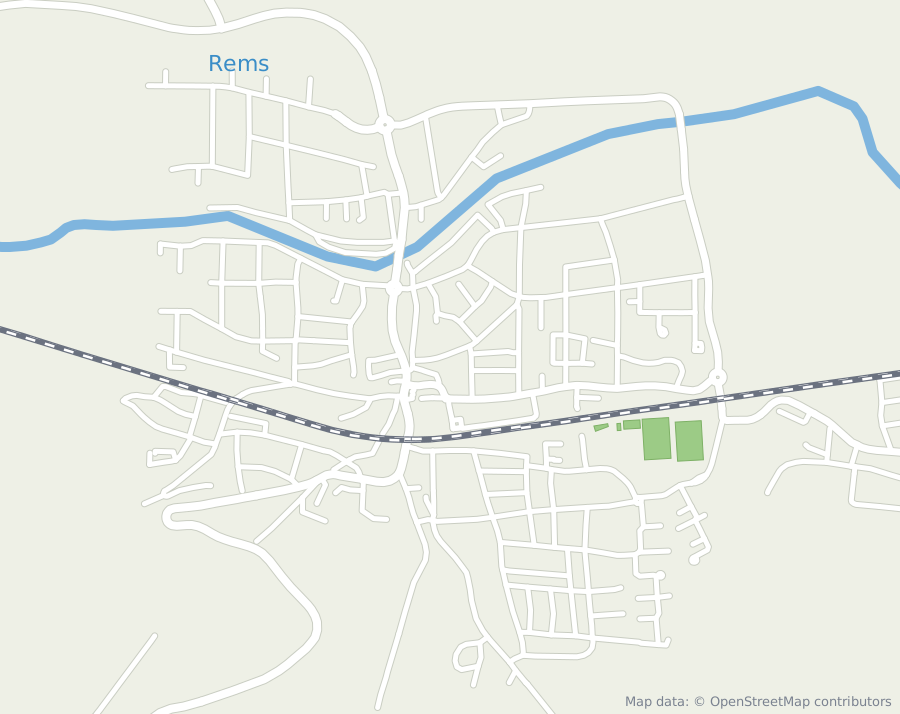
The route along streets and paths is a bit longer, so the walking time is an estimate. Nothing is saved or sent.
Do you know other places in Winterbach where people used to play football – a meadow, a schoolyard, a pitch that has since disappeared? Feel free to write to us at info@remswelle.de. We are glad to receive tips and will add further former pitches here.
Our wish: more freely accessible football pitches close to residential areas again. Children who can walk to a kickabout move more – and get away from the screen. It need not be expensive: as in the Schießwiesen back then, land that will only be built on later can serve as a pitch for a while. → Surfing, young people and health
Walking distances: foot routing on OpenStreetMap data (FOSSGIS), walking time for adults; children take longer.
Practising surfing on land
Anyone who wants to surf a wave likes to practise on land first. On a surfskate – a skateboard with a swivelling front truck – you learn the same movement as on the water: bend your knees, rise up, take speed out of the turn. Surfers call it "pumping". The best place for it is a pump track, a course of rollers and banked turns on which you move forward without pedalling or pushing – on a surfskate, a skateboard, a balance bike, a BMX or a mountain bike.
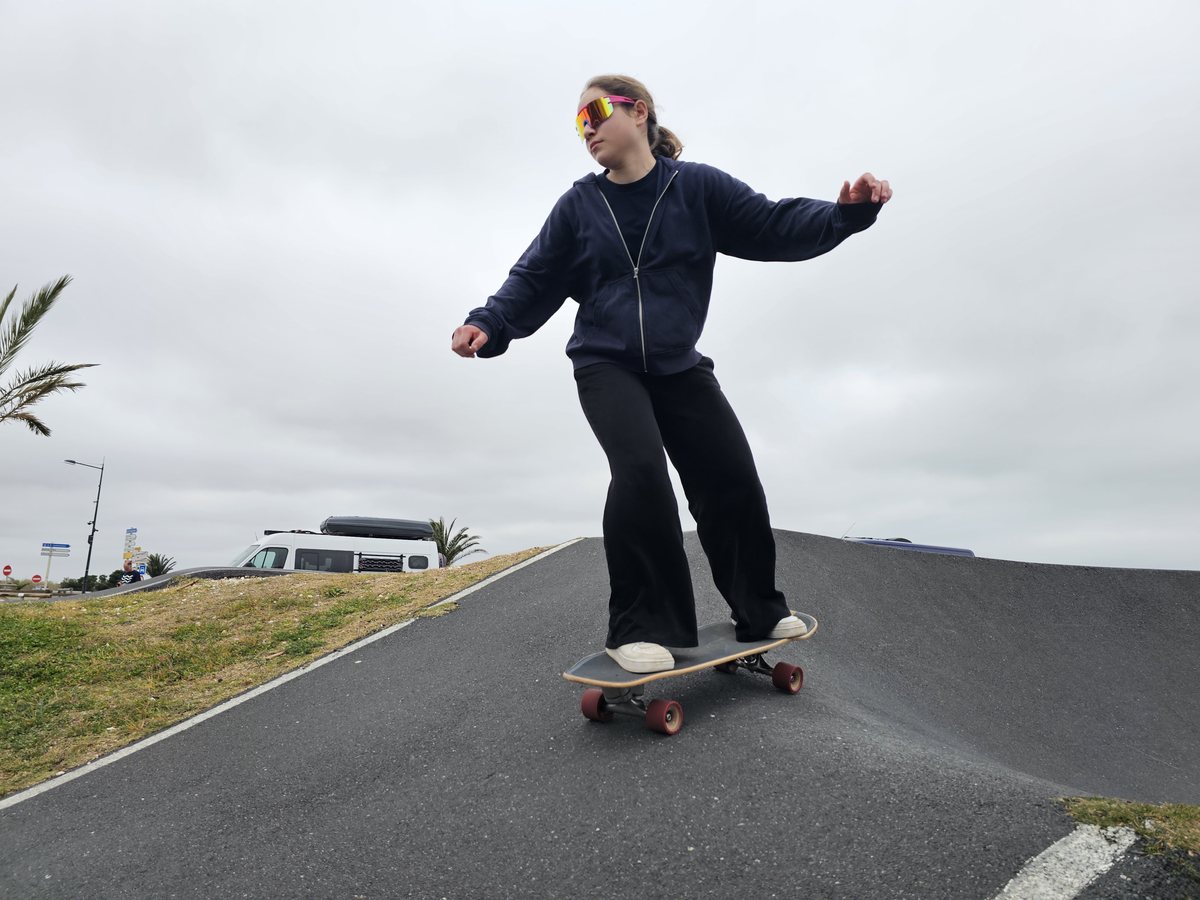
Everyone can ride a pump track, from nursery-age children to teenagers. We can well imagine a pump track in Winterbach too – as a place to practise all year round and to meet, and as a complement to a future wave. More on surfskate, pump track and surfing with the wind: → Surfing without a wave
What we have in mind
The following are ideas, not promises – what is possible will be decided by the future operator of the wave, if it comes. Other waves show what can be done:
- fixed times for children and young people
- cooperation with schools and youth facilities in the Rems valley, for example as a school club
- equipment to borrow, so that nobody needs their own board
- a low youth membership fee in the club
- courses for girls
- an offer in the holiday programme
- environmental education by the river, together with the clean-up
Anyone who wants to help develop such ideas – as a teacher, youth worker, coach or parent – is very welcome. → Get involved
And anyone with questions nobody else asks: they belong in our column → Anna – psst!
What we do not claim
That a wave solves young people's problems. That surfing is a therapy – the studies of surf programmes are encouraging, but small, without a control group, and they come from the sea, not from river waves. That surfing helps against problematic media use. We only say: a wave on the Rems would be a place children and young people would love to go to. That is already a lot.
Sources: see Surfing, young people and health · Deutscher Wellenreitverband, „Rapid Surfing“ · DOSB, „Eine Sportart auf Erfolgswelle“, 22.09.2026 · Deutsche Sportjugend and Naturschutzjugend, „Abenteuer JUUS – Natürlich sportlich“, 2009 · Football pitches: aerial photographs LGL-BW 1973, 1983, 2008 and digital orthophoto (dl-de/by-2-0); walking routes: OpenStreetMap contributors (ODbL), routing FOSSGIS (routing.openstreetmap.de), accessed 28.09.2026; DIN 18034:2020-10 according to Playground@Landscape, "Erreichbarkeit von Spielplätzen"