
The Remswelle project
The Remswelle at a glance
For everyone who wants it short: the essentials of the Remswelle on one page, with figures and sources. Every point links to the article behind it.
What
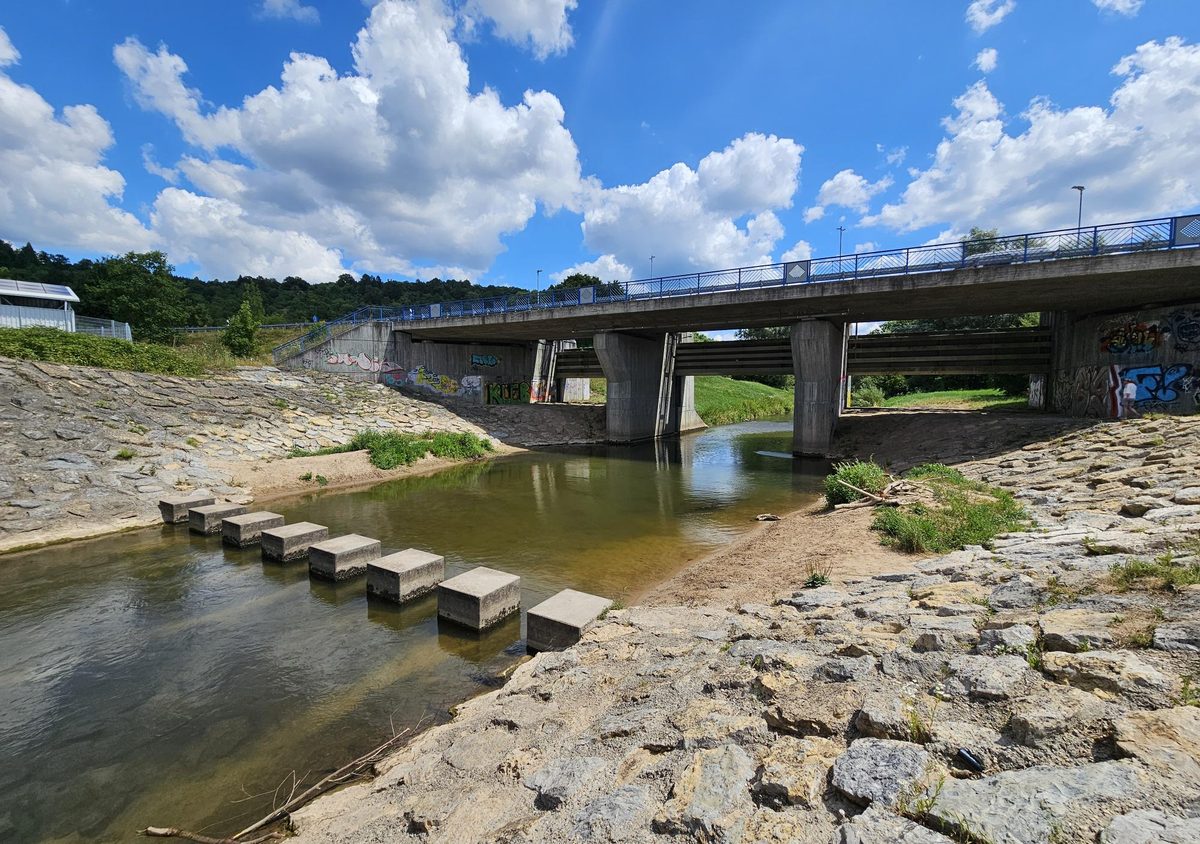
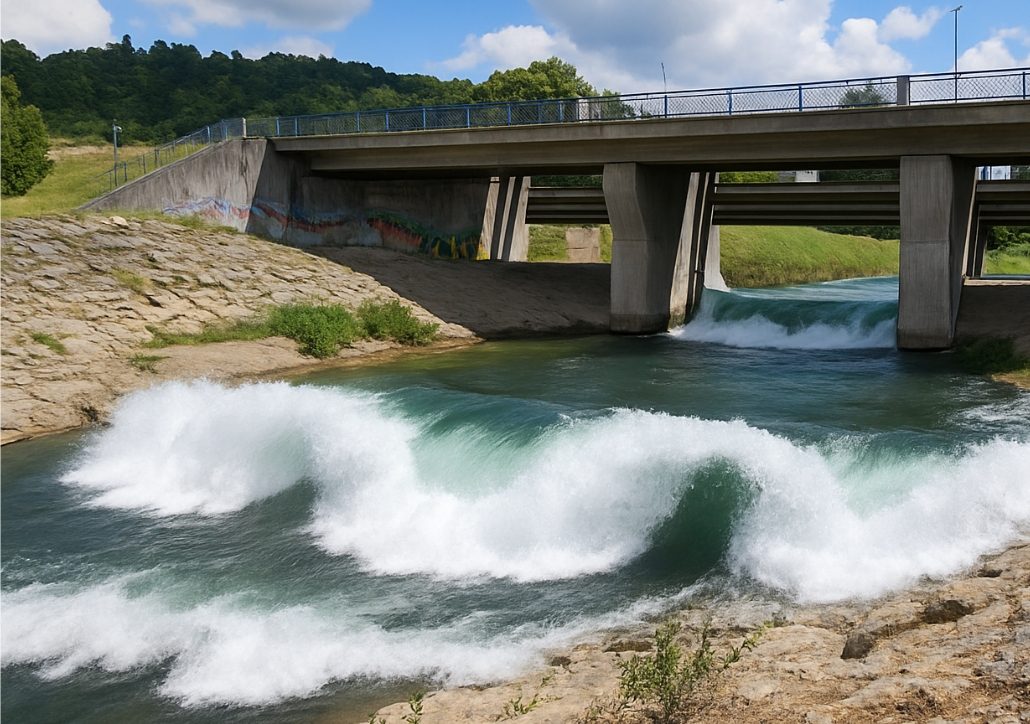
A surfable standing wave in the river Rems, at the existing weir beneath the Ostlandstraße bridge in Winterbach – not a new build on a green field, but a second use for a structure that already stands. Carried by an open citizens' initiative from Winterbach, founded in September 2025. → The project
Where
Winterbach in the Rems valley, Rems-Murr district, east of Stuttgart in southern Germany – a few minutes' walk from the suburban railway station and the town centre, directly on the Rems valley cycle path. The "Remswehr", as it is called locally, is not a weir in the strict sense but the outlet structure of the Schorndorf/Winterbach flood retention basin, built from 2002 to 2005 by the Rems Water Board (Wasserverband Rems) for around 14.3 million euros of public money – a body formed by twelve towns and municipalities, both districts and the state. On almost every day of the year the basin is empty and the Rems flows straight through at the same level. The structure narrows the river and can impound it; to what extent this can provide the head a wave needs is for the feasibility study to establish. Impairing flood protection is out of the question – proving this is a mandatory part of planning and permitting. → The site · → Costs and funding
Why
Three reasons that fit in one sentence each:
- The gap. The Stuttgart region has 2.8 million inhabitants and not a single river wave; the whole state of Baden-Württemberg has just one, in Pforzheim. Anyone who wants to surf near Stuttgart drives to Pforzheim, Munich or Nuremberg.
- The infrastructure is there. Essential infrastructure – outlet structure, reinforced banks, access – already exists in Winterbach, built with public money for flood protection. The head for the wave has to be created by an installation; no channel is needed.
- A young competitive sport with no training venue in the region. Rapid surfing on standing waves has had German Championships since 2019, today with junior categories, and since 2026 a national squad and a European Championship – in 2026 the championships were part of "Die Finals" in Hanover with 9,000 to 10,000 spectators a day. Surfing in the sea has been Olympic since 2021; standing waves are the sports venues of inland regions. → Rapid surfing
On top of that comes what a wave can mean for children and young people: a trend sport that can be especially attractive to young people, exercise outdoors by the river and surfing on the doorstep instead of a long-distance trip. → Children and young people
More than a wave: why we look at the whole landscape
remswelle.de is not only about the wave but also about floods and soils, the vineyards of 1832, cold air and bees. It belongs together:
- Water for the wave. A wave does not need as much water as possible at once, but enough water for as long as possible. Whether rain runs off within hours or is stored in the soil and released slowly is decided by the landscape. In a what-if calculation with our gauge data, a landscape that holds part of the quick runoff brings one to three weeks more surfable days a year.
- The Rems has become flashier. Mean discharge has stayed the same since the 1930s, but the day-to-day variation has risen by about 17 per cent – statistically clear. For the wave this is the wrong direction. → River flow
- Learning from history. That is why we deliberately study the history of the landscape: the 1832 cadastral map, aerial photos since 1953 and the terrain model show where the landscape used to hold water: meanders, floodplains, wet meadows, vineyard steps. Between 1958 and 1968 Winterbach was "cleared of floods" – the water was to drain away quickly. Today holding it back is added.
- In harmony with nature and water protection. That is the only way there will be a Remswelle – and that is how we want it. That is why we want to know what lives along the Rems.
- Winterbach as an example. For the wave, the catchment upstream counts, from Essingen to Schorndorf and along the Wieslauf. Winterbach alone cannot turn the Rems into a sponge, but it can show how it's done.
More surfable days are a by-product of what is good for the landscape anyway. → What does all this have to do with surfing?
What the river can deliver
We analysed 90 years of gauge data from the Schorndorf state gauge: in the mean of 1996 to 2025, discharge would lie within a window of 3 to 15 m³/s on around 150 days a year and between 2 and 12 m³/s on around 210 days – mostly from October to May, with a gap in high summer and a trend towards fewer days. These are our assumptions from public data; the operating limits of the installation will be set by the feasibility assessment. On the home page we show live every day whether the wave would be running today. → River flow of the Rems
What it costs
There is no figure for the Remswelle yet – only after the feasibility assessment. For orientation: the Fuchslochwelle in Nuremberg cost around 3 million euros (half from the Free State of Bavaria), the Leinewelle in Hanover 2.5 million without public money, Salzburg's wooden ramp 90,000 euros. The existing infrastructure could reduce the cost compared with a completely new build; by how much, only the feasibility assessment can show. A trial installation with an adjustable board or a small ramp would be the inexpensive way in. Possible funding routes: the state's Tourism Infrastructure Programme and municipal sports facility funding. For comparison: for the Remstal Garden Show 2019 each of the sixteen municipalities built itself a landmark – Winterbach's monopteros, according to the planning figures, around 140,000 to 150,000 euros, half from the municipality, half from the region. → Costs and funding · → Feasibility study
Where we stand
Core idea in place, feasibility and conversations in progress, concept and implementation open. Next steps: talks with the Rems Water Board, the district water authority and the regional council; a hydraulic pre-assessment; later the founding of a club, the ecological assessment and the water-law procedure. We do not promise a wave for tomorrow – river waves in Germany take several years – but an openly documented road. What this is about now: not yet a decision to build, but finding out whether a safe, ecologically sound and reasonable wave is feasible. Examine, assess, decide together. → Project status · → Questions and objections
What we do not claim
That the wave will certainly come. That it costs nothing. That it will bring streams of tourists – there is no economic impact study on river waves; what can be shown is that tourist boards from Munich to Hanover list their waves as attractions. And that river waves are Olympic – surfing is Olympic, not the wave.
For the press
Press enquiries to info@remswelle.de, contact person Robin Haiss. Responsible for the content is the Remswelle initiative (see the German imprint). Logo and images are available for editorial use with the credit "Initiative Remswelle"; visualisations are marked as such and must remain so. The figures on this page are documented – the sources are in the linked articles. First press report: "Eine Welle zum Surfen in der Rems", Schorndorfer Nachrichten/zvw.de, 18 May 2025. → About us
Images: today and as visualisation
The visualisations show ideas, not plans. Please always label them as "visualisation".
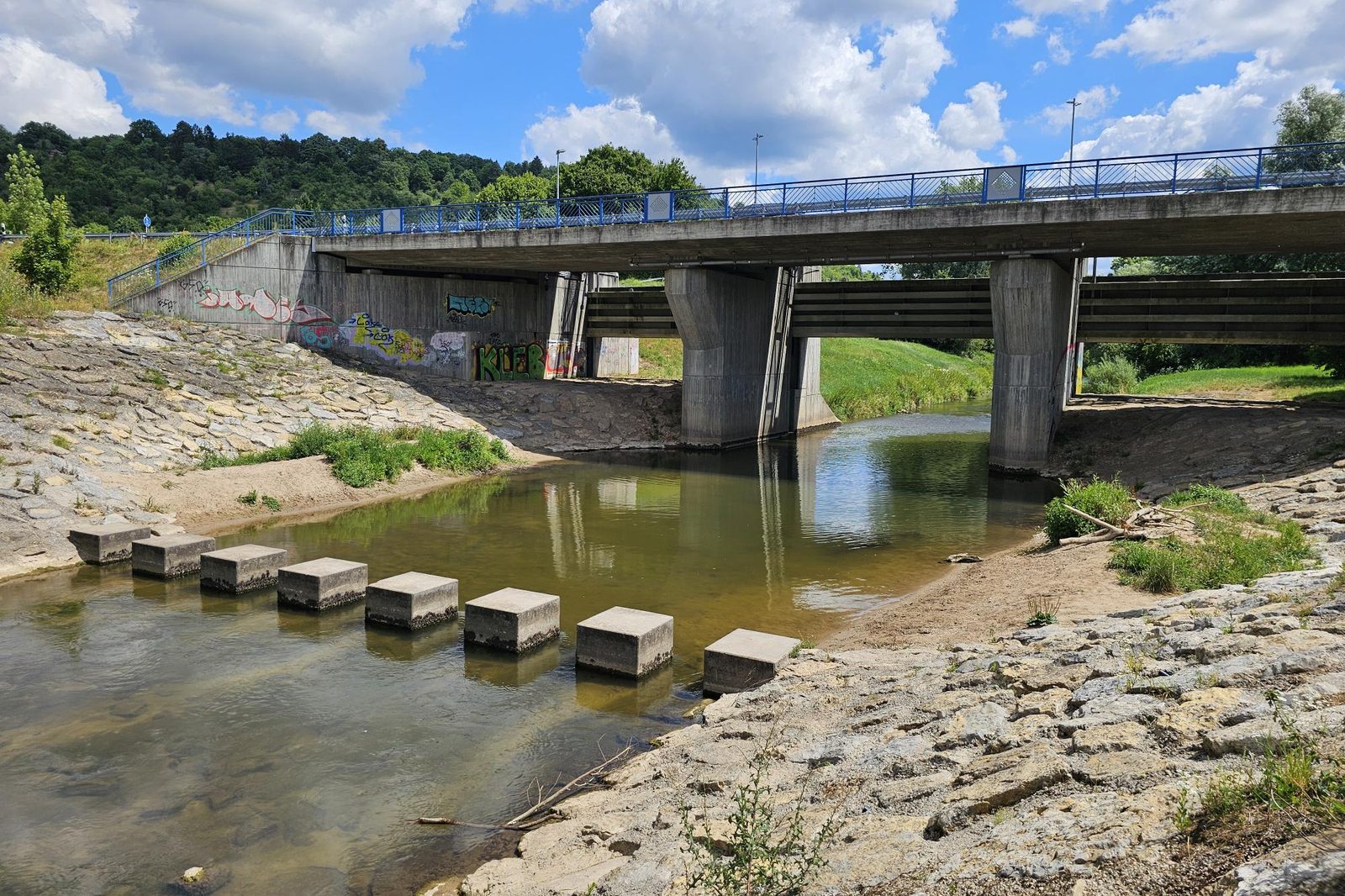
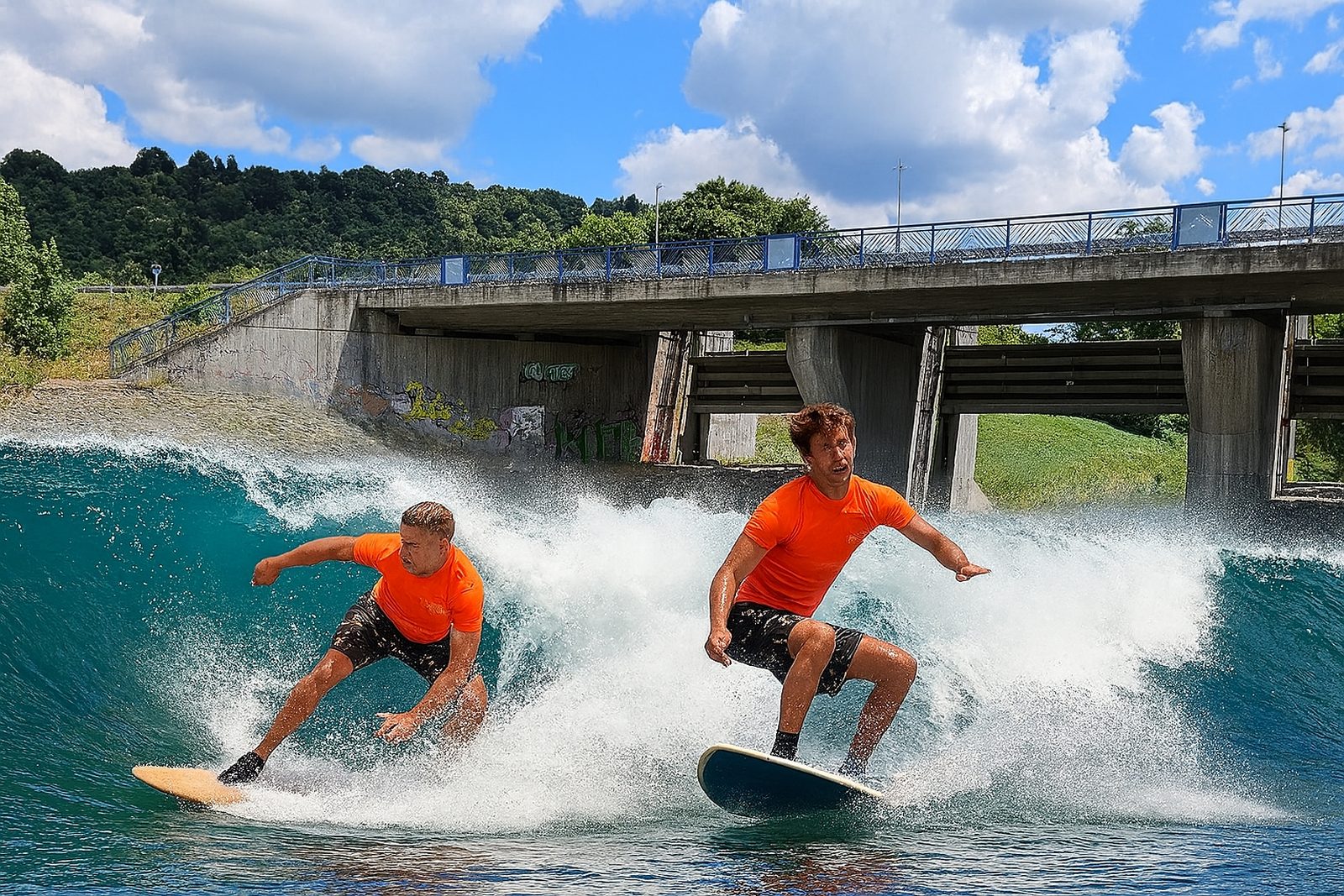
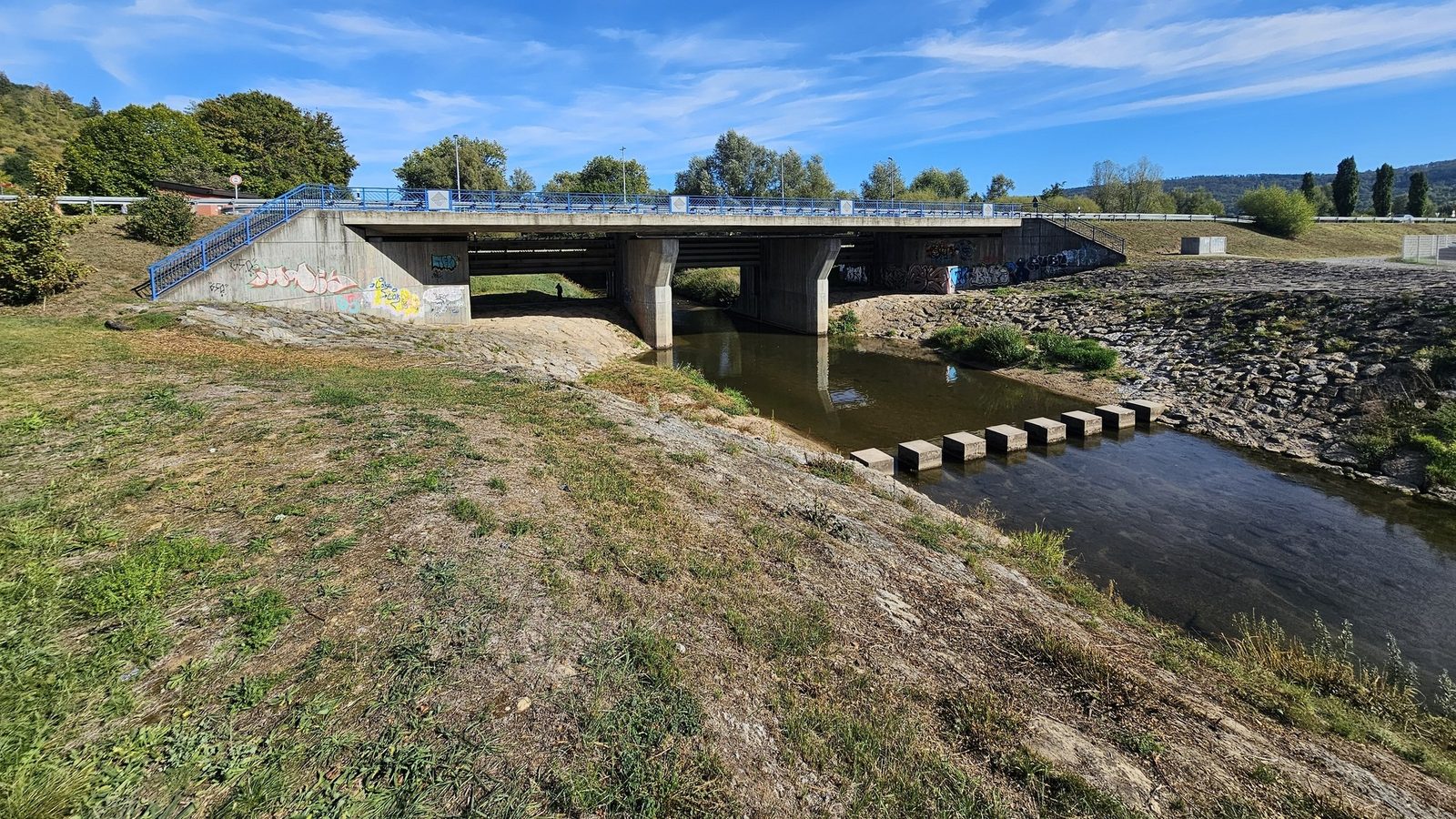
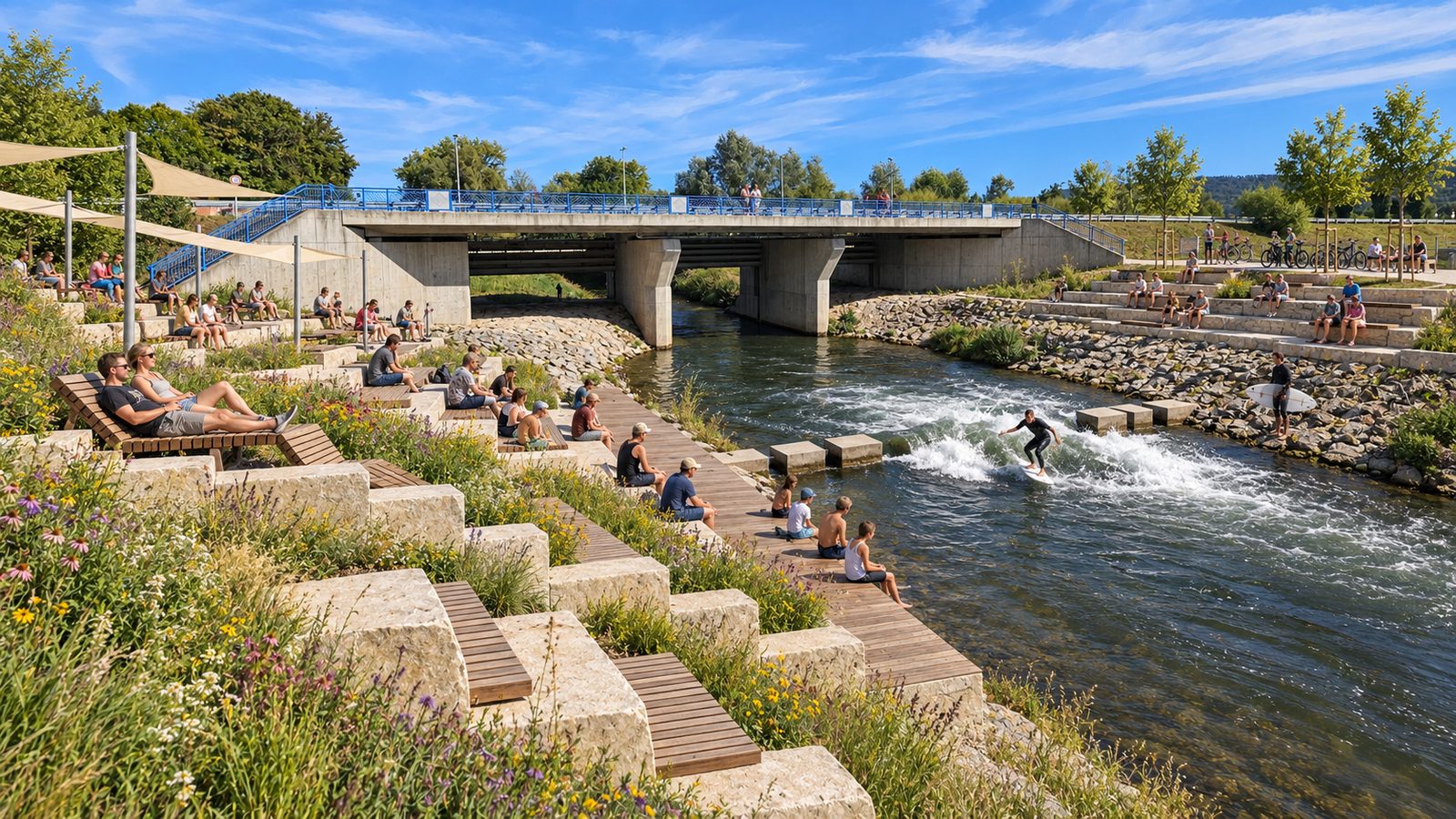
More flow for the Rems – and for the wave: story ideas for editors
Around the Rems at Winterbach there are stories that stand on their own, even without surfing – and yet they are connected: all of them are about how water, terrain and people shaped this landscape and how it holds water. All pages are referenced and name their sources. On the website they are arranged into five journeys of discovery. → Five journeys of discovery
- More flow for the Rems: why a surf initiative is interested in soils, vineyard walls and cisterns – with a what-if calculation of how many surfable days a landscape that holds rain longer could bring. → What does all this have to do with surfing?
- First drain fast, today also hold back: how Winterbach was "cleared of floods" between 1958 and 1968 – Lehenbach reservoir, culverts, removal of the old Rems weir, filled-in mill canal. → Flood protection
- How the Rems flowed through Winterbach in 1832: cadastral map, aerial photo of 1968 and today as sliders – with the vanished mill race. → Journey through time
- The forgotten wave: until 1862 firewood was floated down the Rems. Rafting is UNESCO cultural heritage – timber floating on the Rems is its forgotten chapter, and the Remswelle would be its modern echo. → Timber rafting on the Rems · → The forgotten wave
- Detective work on the Hungerberg: a puzzling ditch at the forest edge, explained with the terrain model and the 1832 cadastral map – and the question of where the old salt road ran. → Traces in the Hungerberg
- Vineyards of tomorrow: how warm the Hungerberg is today, how warm around 2045 – and which grape varieties might suit it then. A thought experiment with the Huglin index. Plus a discovery: where vines stood in 1832, deeply trenched vineyard soil lies to this day – even under orchards and forest. → Vineyards of tomorrow · → The soil shows where vines stood
- When the Rems runs low: since 23 June 2026, no water may be taken from streams and rivers in the Rems-Murr district, not even with a watering can – extended until 31 October. What this means for farmers, winegrowers and gardens – and why you should water in winter. → When the Rems runs low
- Basins, lakes and ponds: which water bodies really hold water back in heavy rain and which are already full – with the Lehenbach valley in 1953 and today, and how compensation works when building in a flood plain. → Basins, lakes and ponds
- Why slopes slide: 25 years after the Urbach landslide – how to read slopes like a ski tourer reads snow, and what the official map shows on the Hungerberg. → Why slopes slide
- The Winterbach cistern paradox: when heavy rain comes, the garden cistern is often already full. What the gauge record reveals about the seasons of floods, what a retention cistern does differently and where Winterbach's spring water comes from. → Sponge landscape · → Springs and hillside water
- Barbel, kingfisher, beaver: who lives on the Rems, which 27 fish species belong here and why the Water Framework Directive rates it only "moderate". → Wildlife
- Too many bees? Do honeybees crowd out wild bees? Why things get tight in high summer, when little is in bloom and honeybees fly more than two kilometres – and what helps. → Too many bees?
- Anna – psst!: children's questions with a comic figure – from "Can you surf from the Rems all the way to the sea?" to "Is a landslide something like an avalanche?". Plus a sports-ground finder for children. → Anna – psst! · → Children and young people
- Which river waves already exist? All known river waves in the German-speaking countries, with status and data. → Wave directory
Downloads: Fact sheet as PDF (one page, 1.3 MB) (opens in a new tab) · Factsheet in German (PDF, 1.3 MB) (opens in a new tab) · Image pack as ZIP – logo, visualisations, photos, maps, charts with captions and credits (5.3 MB) (opens in a new tab)
Sources: see the linked articles; in addition Wasserverband Rems, HRB 6 Schorndorf/Winterbach (construction costs, commissioning 21 October 2005) · ZVW, 27 February 2019 (monopteros) · German Surfing Federation (DWV), Die Finals 2026 · LUBW, Schorndorf/Rems gauge 431 (own analysis)